How fossil fuel prices and profits are making YOUR life more expensive.

Ever wondered what's behind the rising costs on your heating bill or at the gas pumps? It may not be what you think.

Read our reports for a dollars-and-sense breakdown of how the profits pocketed by oil and gas corporations, CEOs, and investors came at the expense of workers and consumers.

The Reports

REPORT ONE

Evidence on the impact of fossil fuel prices and profits on Canadian living standards

In early 2022, world oil prices rose 65% to $130 USD per barrel. Our first report, Counting the Costs, documents how that jump was the single biggest factor in surging inflation around the world. This wasn’t a one-time crisis — it’s part of a pattern. Read our report to understand how oil prices are set, why they are so volatile, and how they drive up costs for households and businesses.

Report One
March 2025

Counting the Costs

How the spike in world oil prices in 2022 (caused mostly by financial speculation on global futures markets) was the main factor causing the subsequent surge in inflation in Canada (and elsewhere). That oil price spike cost Canadians almost $200 billion over the next three years — $12,000 per household.
REPORT Two

History repeats itself: Canadians will pay billions more because of yet another far-off war 

In Canada we tie our oil prices to the global futures market, meaning we ride the same price rollercoaster as everyone else — regardless of production at home. This policy choice bears painful consequences when geopolitical conflicts on the other side of the world send prices soaring. Our report dives into what you need to know about the closure of the Strait of Hormuz and how much it will cost Canadians.
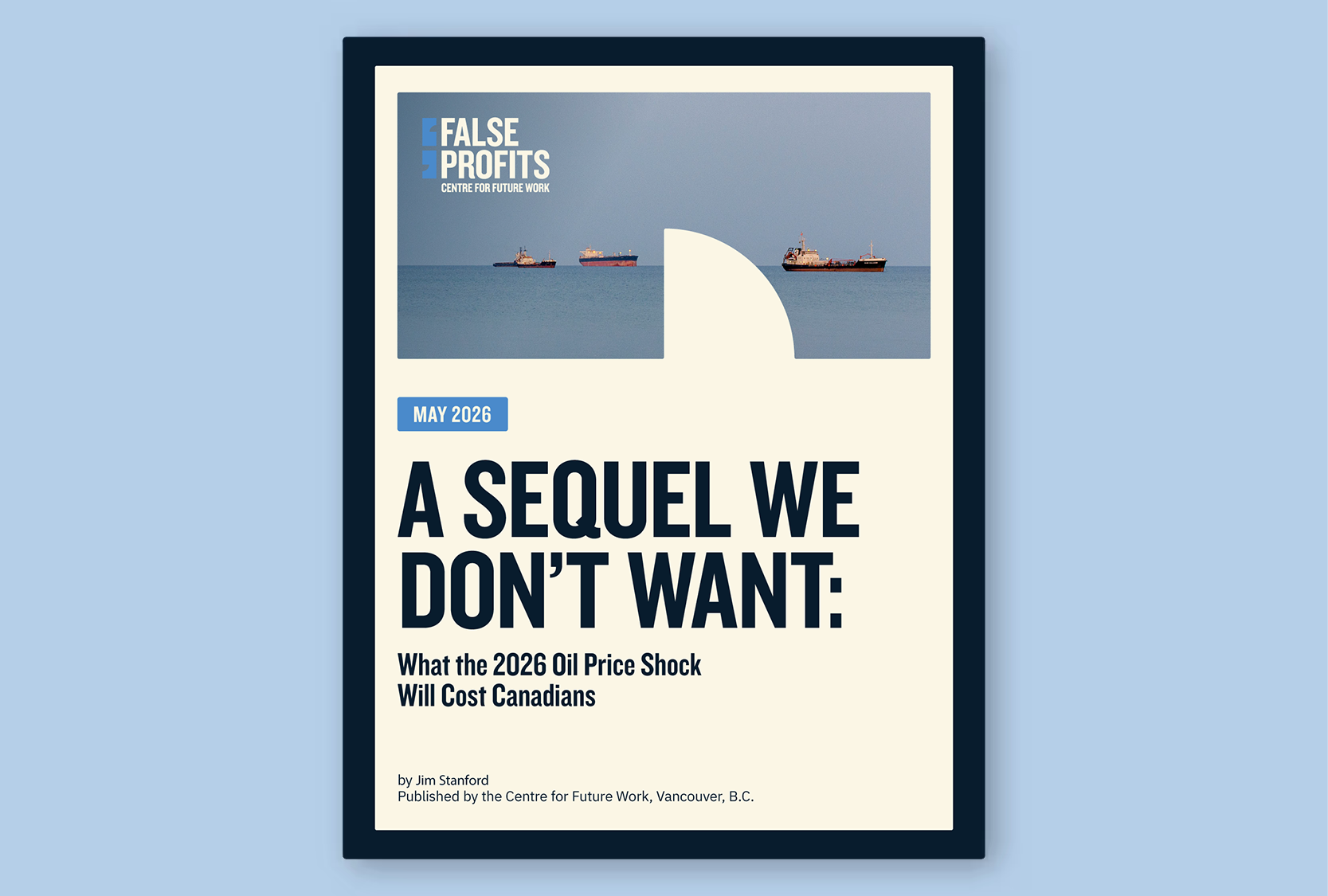
A report cover showing the title and an image of oil tankers on the ocean
Report Two
May 2026

A Sequel We Don't Want

In this report, we look at three possible scenarios involving the re-opening of the Strait of Hormuz and calculate how each will impact Canadians’ pocketbooks. Best case scenario? The Strait reopens immediately, but we still pay an extra $50 billion in higher prices for fuel, and other goods and services. Worst case scenario? The Strait stays closed for six more months, leading to $129 billion in extra costs for Canadian consumers. All a result of our own policy choices —  not economic forces.

The Breakdown

Mythbusting: Do Oil & Gas really make life affordable?
Why do we tie our oil prices to the global market and who’s benefitting? Watch to understand the oil futures market and its impact on oil and gas prices in Canada. Spoiler: Canadians are paying for it!

The High Cost of Oil's Wild Ride

Canadian prices are still tied to global oil futures markets but there are measures we could take to reduce price volatility, protect Canadian consumers and our economy from another inflation-driven crisis. Watch to learn how.

The Roller Coaster of Oil Prices

Tune in to our audio explainer to understand how oil prices are set, why they are so volatile, how they drive up costs for households and businesses, and what measures we can take to protect Canadian consumers and our economy from another inflation-driven crisis
The DATA

How financial speculation and corporate power determine oil prices

The 2022 oil price shock wasn’t a one-time crisis — it’s part of a pattern. That surge cost Canadians $200 billion, and history tells us it will happen again. We don’t have to accept this as inevitable.The next crisis is preventable — and the solutions exist.
Listen to find out how.

The Roller Coaster of Oil Prices

Tune in to our audio explainer to understand how oil prices are set, why they are so volatile, and how they drive up costs for households and businesses.